

What is N-Acetylglucosamine Good For?
What is N-Acetylglucosamine?
NAGis a monosaccharide derivative of glucose, formed by adding an acetyl group to glucose. This seemingly small yet powerful molecule plays a crucial role in various physiological processes of the human body—it serves as a core precursor for the synthesis of mucopolysaccharides such as Hyaluronic Acid, chondroitin sulfate, and dermatan sulfate. These mucopolysaccharides are essential components of the extracellular matrix, articular cartilage, and the dermal layer of the skin. In nature, NAG is found in the exoskeletons of crustaceans like shrimp and crabs, as well as in the cell walls of fungi (e.g., Saccharomyces cerevisiae, shiitake mushrooms). Additionally, NAG is present in human breast milk, which underscores its importance in early-life nutrition.
Scientific Evidence for N-Acetylglucosamine
- Joint Health
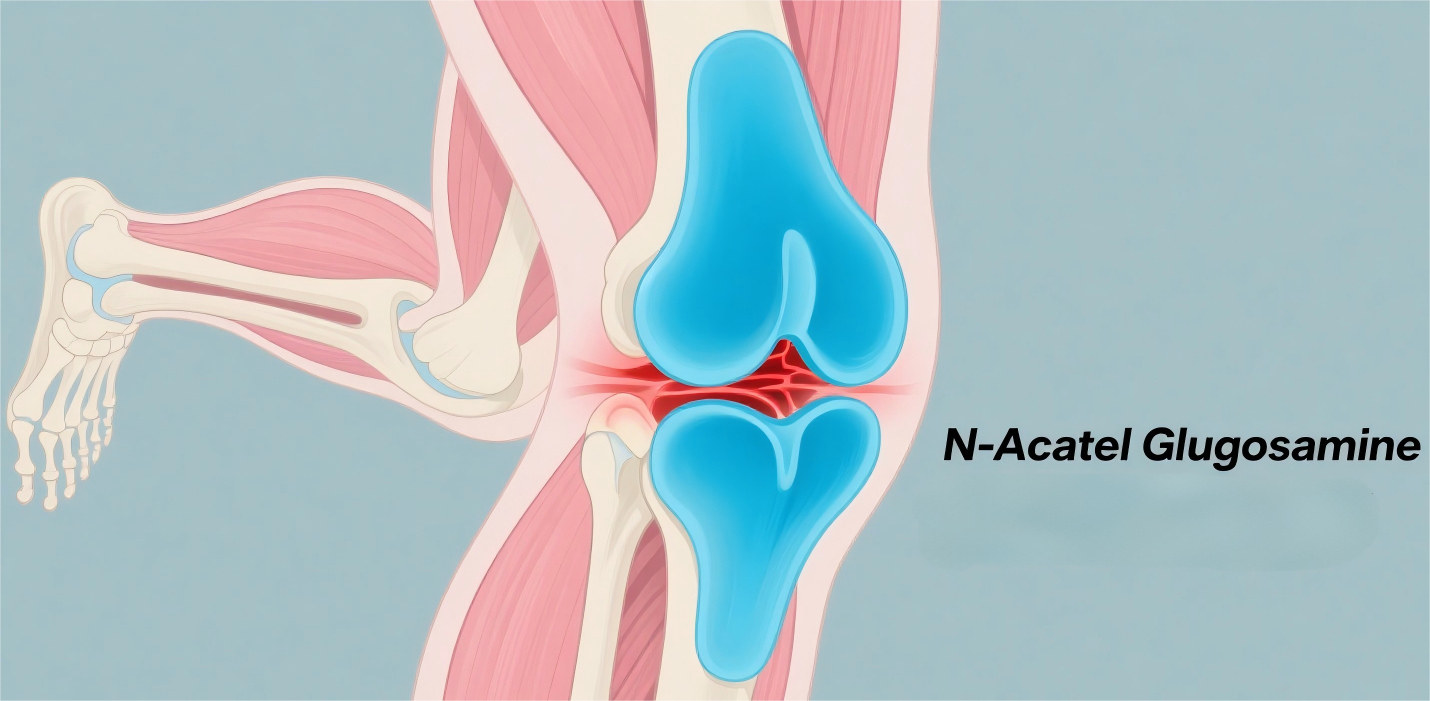
One of the most well-regarded benefits of NAG is its impact on joint health. Our joints have a complex structure, with cartilage acting as a shock absorber. The main components of cartilage are proteoglycans and collagen. However, with aging, injury, or repetitive strain, the ability of cartilage to synthesize mucopolysaccharides declines, leading to conditions like osteoarthritis.
Studies have shown that NAG helps maintain and repair articular cartilage. A randomized controlled trial published in the Osteoarthritis and Cartilage journal in 2018 revealed that osteoarthritis patients who took 1500mg of NAG orally daily experienced a 34% reduction in WOMAC joint pain scores, a 28% improvement in joint mobility, and no further degradation of cartilage thickness in imaging tests.
- Skin Health
In the skincare field, NAG has gradually emerged as a highly promising ingredient. The skin is the largest organ of the human body, and maintaining its health is crucial. However, with aging, UV exposure, and other factors, the skin’s ability to synthesize hyaluronic acid decreases, and the release of inflammatory factors increases, leading to issues such as dryness, redness, and pigmentation.
NAG supports skin health in multiple ways:
- Promoting Hyaluronic Acid Synthesis: An in vitro cell experiment published in the Journal of Cosmetic Dermatology in 2020 showed that when human epidermal keratinocytes were used as the research object, different concentrations of NAG significantly promoted the synthesis of hyaluronic acid in cells. The HA content in the 10 mmol/L concentration group was 217% higher than that in the control group, and this promoting effect was concentration-dependent. Another clinical study involving 30 volunteers with dry skin showed that the skin’s stratum corneum moisture content increased from an initial 28% to 45%, and transepidermal water loss decreased by 32%.
- Anti-Inflammatory and Soothing Effects: A 2019 study in Skin Pharmacology and Physiology pointed out that NAG can reduce the release of inflammatory factors such as IL-6 and TNF-α by inhibiting the NF-κB signaling pathway. In a UV-induced skin inflammation model, topical application of 0.5% NAG reduced the skin redness index by 41% without causing irritation. This property makes it particularly suitable for sensitive and acne-prone skin care. A third-party test on a well-known cosmeceutical brand’s NAG soothing mask showed an 89% effective rate in soothing red skin.
- Brightening and Pigmentation-Reducing Effects:A mechanistic study published in the Journal of Investigative Dermatology in 2021 showed that NAG can competitively inhibit tyrosinase activity with an IC50 value of 2.3 mmol/L, and it has no cytotoxicity to melanocytes. In a clinical experiment involving 25 volunteers with pigmentation, the Melasma Area and Severity Index decreased by 29%, and the skin brightness increased by 15%.
- Digestive Health
The gut is often referred to as the "second brain" of the human body, and maintaining gut health is essential for overall well-being. The integrity of the intestinal mucosal barrier depends on the synthesis of mucopolysaccharides, and NAG is a key precursor for this process.
NAG improves digestive health through two main pathways:
- Repairing the Intestinal Mucosa: An animal experiment published in Gastroenterology Research and Practice in 2022 showed that in the experimental group where rats were given 500mg/kg of NAG orally daily, the area of intestinal mucosal damage decreased by 68%, the mucosal thickness recovered to 85% of the normal level, and the expression of intestinal epithelial tight junction proteins increased by 2 times.
- Regulating Gut Microbiota: As a prebiotic, NAG can selectively promote the growth of beneficial bacteria. An in vitro fermentation experiment published in the Journal of Applied Microbiology in 2020 showed that NAG increased the number of Bifidobacteria by 3.2 times and Lactobacilli by 2.5 times, while inhibiting the growth of harmful bacteria such as Escherichia coli. In a clinical study involving 40 patients with irritable bowel syndrome, after taking 1000mg of NAG orally daily for 8 weeks, the frequency of abdominal pain in patients decreased by 45%, and the regularity of bowel movements increased by 38%.
Applications of N-Acetylglucosamine in Cosmetics
In the cosmetics industry, relying on its multi-functional skincare properties, NAG has been widely used in products such as moisturizers, serums, masks, and eye creams, and it often exhibits synergistic effects when combined with other ingredients:
- Moisturizing Products: In moisturizers, NAG is often combined with hyaluronic acid and ceramides.
- Brightening and Pigmentation-Reducing Products: In brightening serums, NAG has a significant synergistic effect with niacinamide and vitamin C derivatives.
- Sensitive Skin Care Products: Soothing masks for sensitive skin often take NAG as the core ingredient, combined with panthenol and asiaticoside.
- Anti-Aging Products: In eye creams, NAG can promote the synthesis of hyaluronic acid in the skin around the eyes and improve fine lines.
Conclusion
N-acetylglucosamine is a multi-functional and safe compound. It not only has sufficient scientific evidence to support its use in joint health, skin care, and digestive system regulation but also demonstrates excellent synergistic application effects in cosmetics. With the deepening of research, the potential of NAG in new fields such as oral care and hair care is gradually being explored. Whether used as an oral supplement or an ingredient in topical cosmetics, NAG can provide multi-dimensional support for health and beauty. It is particularly suitable for middle-aged and elderly people concerned about joint health, individuals with sensitive skin seeking effective skincare, and those in need of digestive system regulation.